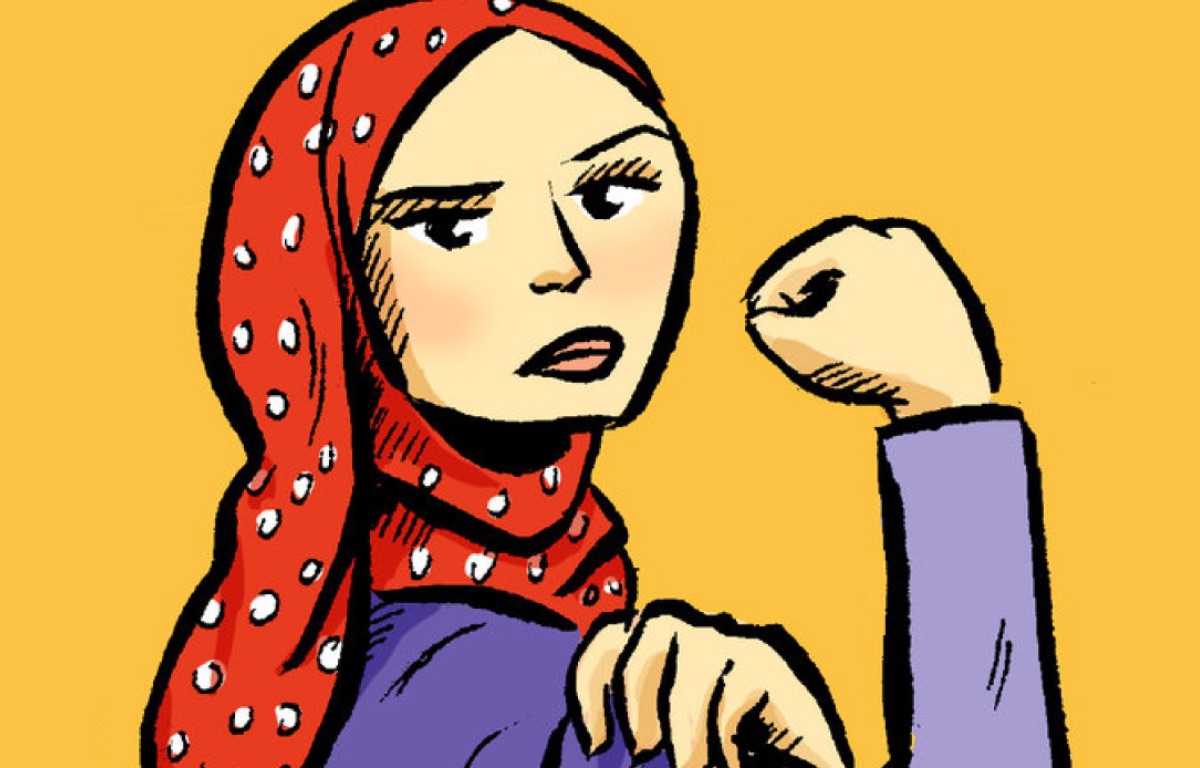
In 2026, the landscape for Muslim women across the European Union has started to become a battleground where legislative intent and social prejudice collide, creating a unique form of systemic exclusion.
While Europe often champions itself as a bastion of human rights and gender equality, Muslim women find themselves caught in a narrowing corridor defined by the intersection of rising Islamophobia and entrenched sexism. Nowhere is this more evident than in France, where the expansion of secularism laws continues to restrict religious expression, and in Belgium, where neutrality mandates effectively bar visibly Muslim women from public spaces. These policies, framed as protections of state integrity or individual liberty, frequently result in the economic marginalization and social isolation of an entire demographic, while hate crimes surge in Germany and the Netherlands, and counter-terrorism strategies deepen the surveillance of Muslim communities.
The situation in France serves as the epicenter of this legal and cultural tension. Following the initial 2004 ban on religious symbols in schools, the French government has steadily broadened the scope of its secularist principles, culminating in recent extensions that prohibit ostensibly religious clothing in all public sporting competitions.
This legislative evolution goes beyond theoretical debate; it translates into tangible barriers for young Muslim women seeking to participate in athletics or pursue careers in the public sector. Reports indicate that the gap in secondary school attainment between Muslim and non-Muslim girls has more than doubled since the introduction of earlier bans, suggesting that educational exclusion is compounding over time. When combined with perceptions of discrimination in the labor market, these policies have contributed to a measurable decline in labor force participation among Muslim women. The narrative that wearing a hijab renders one incompatible with French national identity creates a self-fulfilling prophecy where qualified women are denied opportunities simply because their attire violates a rigid interpretation of neutrality.
Belgium presents a parallel but distinct challenge through its enforcement of “neutrality laws” particularly within the Flemish region. The attempt to ban Islamic headscarves in schools and public institutions reflects a broader political climate that prioritizes a specific vision of integration over religious freedom.
Legal battles such as the Mykias ruling at the European Court of Human Rights have attempted to address these restrictions, yet the practical impact remains profound. In classrooms and workplaces, Muslim women face the impossible choice between their faith and their livelihood. The defense of these measures often rests on the argument that they preserve state neutrality, yet critics argue that true neutrality requires allowing diverse expressions of belief rather than mandating a secular uniformity that disproportionately impacts religious minorities. The cumulative effect is a society where Muslim women are systematically pushed to the margins, their presence in public life conditioned upon the erasure of visible aspects of their identity.
The economic repercussions of these legal frameworks extend far beyond individual cases of unemployment. Research suggests that the perception of a discriminatory environment acts as a powerful deterrent, causing many Muslim women to withdraw from the workforce or avoid pursuing higher education altogether. Field experiments in Germany and the Netherlands have demonstrated that veiled Muslim women face significant hurdles when applying for jobs, particularly in sectors that require direct public interaction. Employers often cite client comfort or adherence to company neutrality policies as reasons for rejection, masking underlying biases under the guise of business pragmatism. This economic disenfranchisement not only affects individual households but also exacerbates poverty rates within Muslim communities, creating a cycle of disadvantage that spans generations. As opportunities shrink, the social fabric frays, leaving many women without the resources necessary to advocate for their rights or access essential services.
Compounding the structural exclusion is a disturbing rise in physical violence and verbal abuse directed at visibly Muslim women. In Germany, police data recorded thousands of hate crimes against Muslims in 2025, with incidents targeting women wearing hijabs representing a significant portion of these attacks.
Berlin alone witnessed a fifty-one percent increase in anti-Muslim hostility, with reports detailing assaults, insults, and harassment specifically aimed at women in public spaces. Similarly, in the Netherlands, preliminary figures for early 2026 indicate a continued upward trend in offenses against Muslim women, reflecting a broader normalization of Islamophobic rhetoric that translates into real-world aggression. These crimes are rarely isolated incidents; they exist within a context where political discourse often demonizes Muslim identity, thereby emboldening perpetrators who view such actions as justified or even patriotic. The psychological toll of navigating daily life under the threat of violence creates a pervasive sense of insecurity that undermines the very concept of safety promised by EU member states.
Adding another layer of complexity to this crisis is the intersection of racism and sexism within EU counter-terrorism policies. Frameworks such as the Prevent strategy, originally designed to stop radicalization, have increasingly been criticized for disproportionately affecting Muslim women by layering racial profiling with gendered stereotypes. These policies often treat religious practices deemed “conservative” or traditional as potential indicators of extremism, leading to heightened surveillance of women who wear the hijab or engage in community activities. The result is a chilling effect on civic participation, where Muslim women feel compelled to silence their voices or avoid public engagement out of fear of being flagged as security risks. This dynamic creates a paradox where women who seek to exercise their rights to religious expression or political activism are simultaneously criminalized for those same actions.
The intersectionality of these oppressions means that Muslim women face barriers that are distinct from those encountered by Muslim men or non-Muslim women. They are targeted not just for their religion or their gender individually, but for the way these identities converge in ways that threaten prevailing norms of secularism and national cohesion.
As 2026 progresses, the trajectory of these trends remains precarious. The continued enforcement of restrictive laws in France and Belgium, the surge in hate crimes in Germany and the Netherlands, and the expansion of intrusive counter-terrorism measures collectively signal a deepening crisis for Muslim women in Europe. Addressing this issue requires more than symbolic gestures or isolated interventions; it demands a fundamental rethinking of how EU nations approach the concepts of secularism, integration, and security. Policymakers must recognize that true equality cannot be achieved by demanding conformity or by sacrificing the rights of minority groups in the name of abstract principles.
Until the intersection of racism and sexism is acknowledged and dismantled within legal and social structures, Muslim women will remain trapped in a double bind, forced to navigate a continent that claims to value diversity while systematically excluding those who most visibly embody it.