Across the European Union, a quiet revolution is underway in school restrooms, parliamentary finance committees, and the invisible marketplace of menstrual necessity. As Scotland’s pioneering free period products scheme marks its sixth year of operation, it has sparked both emulation and resistance across the continent, revealing divisions between Western and Eastern EU members on what some advocates call “menstrual equity.”
The Scottish Template and Its European Ripples
Scotland made history in 2020 when it became the first nation globally to mandate universal free access to period products through the Period Products (Free Provision) (Scotland) Act. This began as a pilot program in 2018 and later evolved into a legal duty on local authorities to provide tampons, pads, and other menstrual supplies to anyone who needs them regardless of income or status.
The results have been telling. According to research by Young Scot, approximately 65% of young women and girls in Scottish educational institutions now receive free period products, with 84% of those users reporting positive impacts on their daily lives. Schools documented lower rates of menstrual-related absenteeism, while employers noted reduced sick days and improved productivity among female staff.
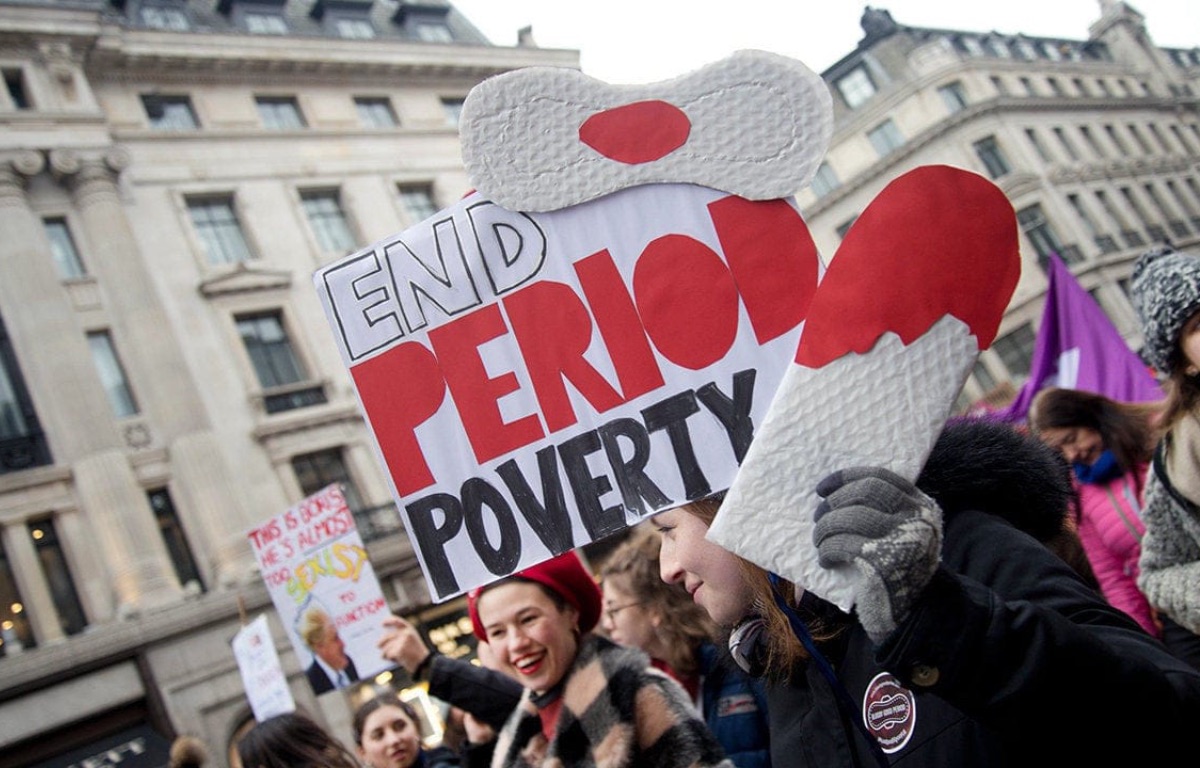
“This is exactly the kind of policy innovation the EU should be championing,” said Marie Lecerf, author of a May 2025 briefing from the European Parliamentary Research Service titled “Addressing Menstrual Poverty in the EU.” The report estimates that roughly 10% of the half of EU population who menstruate experience menstrual poverty, which is a condition defined as insufficient access to menstrual hygiene products and adequate facilities.
Yet the momentum has been uneven. While England, Wales, and Ireland launched similar programs following Scotland’s lead, the continental response has fractured along geopolitical lines.
Tampon Tax Across Member States
One critical battleground has been value-added taxation. For years, many EU member states classified menstrual products as “luxury items,” subjecting them to standard VAT rates rather than the reduced rates applied to essential goods. That changed with Council Directive (EU) 2022/542, which amended the VAT Directive to allow Member States to apply zero rates on menstrual hygiene productsvbut implementation remains voluntary.
“The fiscal discrimination argument has gained traction,” explained Nanna-Josephine Roloff, a Hamburg-based campaigner whose petition to eliminate Germany’s remaining tampon tax gathered more than 190,000 signatures. “The higher tax rate constitutes fiscal discrimination of women based on sex, which shouldn’t be allowed under constitutional principles.”
Corporate Lobbying and Industry Positioning
Behind these legislative changes lies coordinated industry advocacy. Major manufacturers including Procter & Gamble, Kimberly-Clark, and coalitions of smaller brands have mounted lobbying campaigns aimed at securing favorable tax treatment while simultaneously positioning themselves as champions of gender-equitable fiscal policy.
These efforts have involved filing position papers with national finance ministries, meeting directly with European Parliament members, and funding advocacy groups that frame the tax issue as discriminatory. The strategy appears to have paid dividends, contributing to the wave of reductions announced throughout 2024-2025 across multiple member states.
However, resistance persists. Some retailers and fiscal conservatives warn that eliminating the tax could reduce government revenue and set precedents affecting other product categories. The debate reflects broader tensions between social welfare objectives and traditional tax policy frameworks.
Economic Impact: Education and Productivity Losses
The human cost of inadequate menstrual product access extends far beyond individual discomfort. European research from 2024-2025 indicates significant impacts on education and workplace participation.National surveys across the EU report that between 12% and 20% of female students miss school at least once monthly because they cannot afford adequate menstrual products. This translates to an average loss of approximately 0.6 days per monthor roughly seven full school days annually. Aggregating these findings yields an estimated overall European prevalence of menstrual-related absenteeism at approximately 15% among school-aged girls.
The productivity implications extend into employment. Employers in countries with free provision schemes like Scotland report measurably reduced sick-day usage among female staff during menstrual periods. However, comprehensive data on EU-wide economic losses remain limited, with researchers calling for more rigorous longitudinal studies.
The European Parliament has recognized menstrual poverty as a gender equality issue, with MEPs calling for greater access to free products as part of broader initiatives addressing structural barriers to equal opportunity.
While Western nations increasingly adopt free provision models, several Eastern EU members maintain minimal support structures despite EU directives permitting zero-rated taxation.
Romania offers a complex picture. In 2023, the country passed legislation mandating free provision of menstrual hygiene products in schools, kindergartens, and prisons. By mid-2025, the Ministry of Education reported that over 150,000 schools stocked free pads and tampons, reaching approximately 1.2 million pupils. Yet challenges persist: high prices on imported products and informal markets continue circulating counterfeit and low-quality items, particularly in rural areas with weaker supply chains.
Bulgaria presents a different trajectory. Despite lowering VAT from 20% to 10% in early 2024 following the EU’s 2022 amendment, the government has not introduced a national free-product scheme. Charitable NGOs and municipal pilots in Sofia and Plovdiv have stepped into the gap, distributing free kits but coverage remains patchy. Reports indicate a growing gray market of imported low-cost pads, often of questionable quality, circulating in border towns.
Hungary has taken middle ground. Following a 2022 reduction of VAT to 5%, a 2023 decree allowed public schools to offer free menstrual kits. The program expanded in 2024 to cover all secondary schools and several vocational colleges, reaching an estimated 800,000 students by end of 2025. Nevertheless, black-market trade in cheaper, unregulated products persists in Budapest’s outskirts and across the Serbian border, driven by price-sensitive consumers and occasional shortages during 2024 supply-chain disruptions.
Black Markets and the Unintended Consequences of Taxation
Where menstrual products carry substantial taxation or remain financially inaccessible, alternative distribution channels emerge. These shadow markets raise serious health concerns.
Low-quality imports, counterfeit products, and unregulated alternatives circulate particularly in regions where certified brands experience supply shortages or remain prohibitively expensive.
The phenomenon creates a paradoxical situation: fiscal policies designed to generate revenue instead fuel illegal markets while failing to reach intended beneficiaries. Public health advocates argue that proper regulation combined with subsidized or free provision would better serve consumer safety than prohibition or excessive taxation.
Fragmented Solutions, Shared Challenges
As the EU approaches the second half of 2026, the landscape of menstrual equity remains fragmented. Scotland’s success demonstrates that comprehensive free provision is politically achievable and economically beneficial. Italy’s complete VAT elimination shows that fiscal barriers can be removed without devastating budget impacts. Yet Eastern European lag suggests that political will varies dramatically even within shared regulatory frameworks.
The European Parliament’s ongoing consideration of further measures, including potential mandates requiring free provision in educational and institutional settings, signals continued momentum. However, implementation challenges persist across diverse economic contexts, from affluent Western economies to recovering post-communist states facing competing fiscal priorities.
What’s clear is that period poverty continues affecting millions across Europe regardless of policy variations. With an estimated 112 million people menstruating in Europe and 42% experiencing period poverty according to some advocacy organizations, the issue transcends national boundaries.
The question now isn’t whether menstrual equity is necessary, asthe medical, educational, and economic case has been established. The question is whether Europe can overcome political fragmentation to ensure that no woman, girl, or menstruating person must choose between basic dignity and financial necessity.