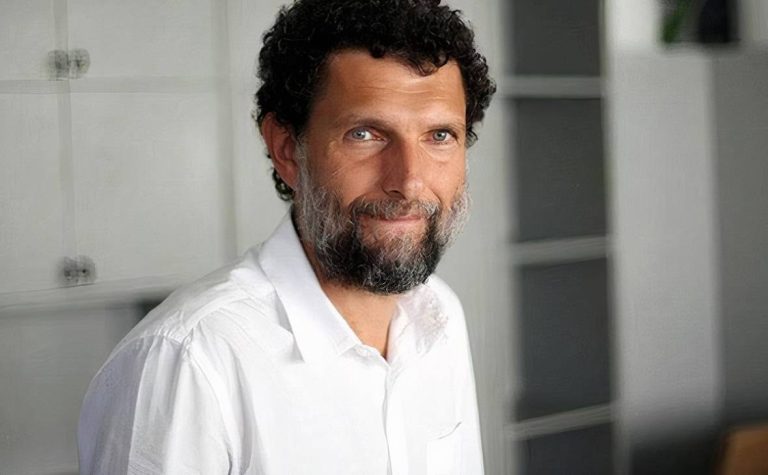
The Council of Europe’s Committee of Ministers has set a deadline for Turkey to release businessman and human rights defender Osman Kavala, following repeated rulings by the European Court of Human Rights that his detention is unlawful.
Kavala has remained in prison since 2017, despite multiple court orders for his release and acquittals in Turkish courts.
Turkey now faces a November 29 deadline to comply with the ECHR’s decisions. If the country fails to act, the Committee of Ministers may initiate infringement proceedings, which is a rare yet serious step that could lead to the suspension of Turkey’s membership or voting rights within the Council of Europe and other diplomatic repercussions.
Council of Europe Considers Unprecedented Action
The Committee of Ministers, made up of ambassadors from member states, will review Türkiye’s compliance after the deadline. If Turkey does not release Kavala, the Committee could formally notify Ankara and set a new timeframe for a response.
Should Turkey continue to refuse, the case may be referred back to the ECHR for a ruling on whether the country’s actions violate the European Convention on Human Rights.
A two-thirds majority vote among Council members would be required for any further action. Turkey, a signatory to the Convention since 1950, has a history of resisting ECHR rulings, most notably in the 2003 Loizidou v. Turkey case, which ended with Turkey paying reparations for human rights violations in Cyprus after years of legal battles.
Council officials declined to comment on the record, but sources within the organization indicated that political and economic considerations could influence the final decision.
Kavala’s Detention Draws International Scrutiny
Osman Kavala was first arrested on 18 October 2017 on charges related to the 2013 Gezi Park protests and later accused of involvement in the 2016 coup attempt. In December 2019, the ECHR ruled that his detention was politically motivated, intended to silence him and violated his rights under the Convention.
Despite the ECHR’s ruling, Turkish courts have repeatedly extended Kavala’s imprisonment, most recently adding espionage charges that his legal team describes as baseless and politically driven. In a statement to the press, Kavala’s lawyers expressed frustration with the prolonged legal process and hope that international pressure will secure his release.
Turkey’s Compliance Record Under Fire
Turkey’s refusal to implement ECHR rulings in Kavala’s case along with other has caused concerns among European officials about the country’s commitment to human rights and the rule of law.
If the infringement process moves forward, it would mark only the second time the Council of Europe has taken such action against a member state, following a similar case involving Azerbaijan in 2017.
The coming months may prove decisive for Turkey’s relationship with Europe.