Since late 2025, Eastern Europe has experienced a troubling resurgence of anti-feminist and anti-gender movements, particularly in Poland, Hungary, Slovakia, and Bulgaria. These movements, often framed as efforts to protect traditional values or national identity, have gained significant political influence, shaping laws, policies, and public discourse in ways that directly undermine gender equality and LGBTQ+ rights. What is less visible, however, is the transnational network of funding, ideological exchange, and strategic coordination that connects these movements to powerful U.S. conservative groups, including the Heritage Foundation, the Heartland Institute, and Project 2025.
Hungary has emerged as the epicenter of this backlash. Under the leadership of Viktor Orbán, the government has systematically dismantled legal protections for gender identity and LGBTQ+ rights. In 2020, Hungary ended legal recognition of gender identity, making it impossible for transgender individuals to change their gender markers on official documents. In 2021, the government passed a so-called child protection law that banned the sharing of any content promoting homosexuality or gender transition to minors. This law was widely condemned as a form of anti-LGBTQ+ propaganda and was compared to Russia’s 2013 law targeting LGBTQ+ rights. The implications of this legislation were immediate and far-reaching. In 2025, Hungarian authorities used the law to ban Budapest Pride, the first time an EU member state had outright prohibited such an event. Despite the ban, the Pride march proceeded as a protest against Orbán’s government, drawing tens of thousands of participants to the streets of Budapest.
The legal and political backlash against Hungary’s anti-LGBTQ+ policies reached a turning point in April 2026. The European Court of Justice delivered a landmark ruling, declaring that Hungary’s anti-LGBTQ+ law violated the EU’s fundamental values, including equality, human dignity, and minority rights. The court found that the law attempted to exclude, isolate, and sideline LGBTQ+ people from society, marking the first time an EU member state was found in violation of the Union’s core principles. The ruling was described as historic, wide-ranging, and unprecedented, yet Orbán’s government refused to implement the decision before its electoral defeat in April 2026. This defiance underscored the depth of the ideological divide between Hungary’s leadership and the broader European Union.
The Danube Institute in Budapest has played a pivotal role in fostering collaboration between Hungarian conservatives and U.S. groups. In November 2025, Kevin Roberts, president of the Heritage Foundation, participated in a conference at CEU University in Spain, which has ties to the Danube Institute. This collaboration is part of a broader effort by Project 2025, a U.S. conservative policy blueprint, to export its Christian nationalist ideology to Europe. According to a 2026 report by the Global Project Against Hate and Extremism, Project 2025 has evolved from a domestic governing plan into a global political project. The report details how the initiative’s ideology is shaping policies in Hungary, Poland, Slovakia, and Italy, where conservative networks have pushed anti-abortion measures, anti-surrogacy rhetoric, attacks on LGBTQ+ rights, and broader campaigns against what they frame as gender ideology. These networks are not only ideological but also financial, with American political operatives and conservative figures linked to Trump and the Heritage Foundation actively working through groups connected to Viktor Orbán.
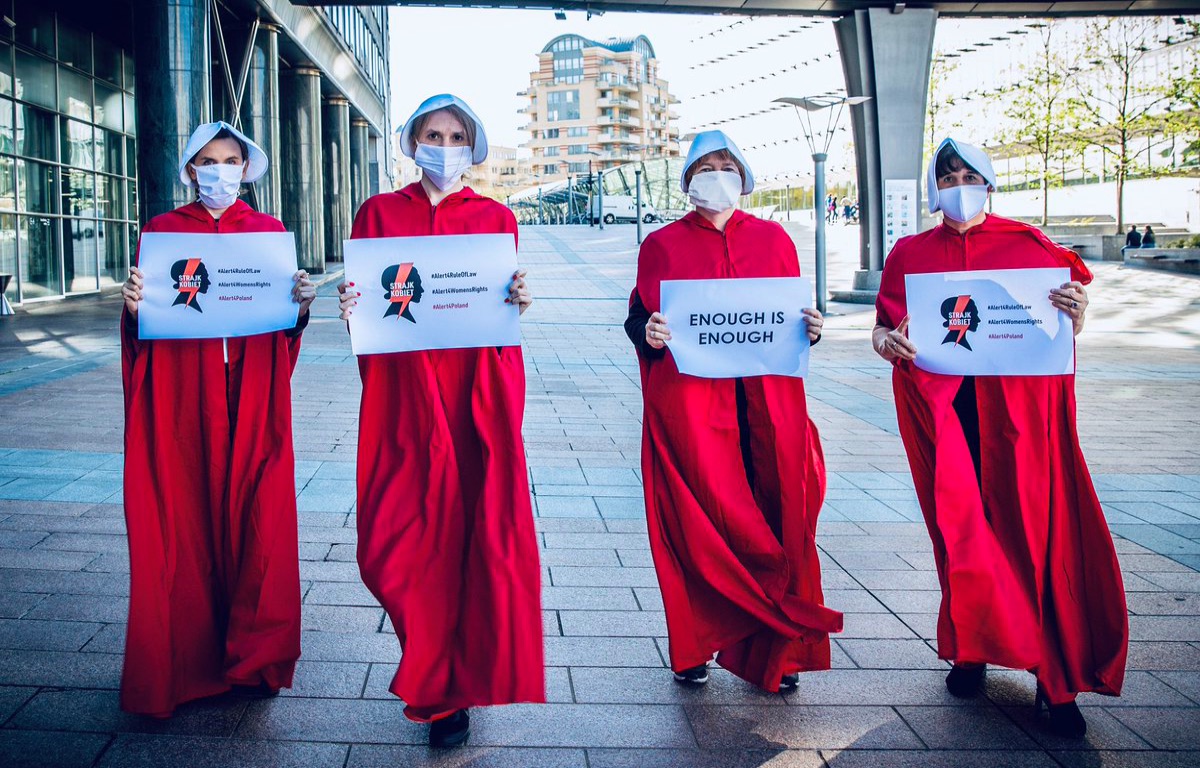
Poland’s anti-feminist and anti-LGBTQ+ movements are deeply intertwined with Catholic nationalism and the Law and Justice party. Between 2019 and 2023, over 100 local governments in Poland declared themselves LGBT-free zones, a symbolic but chilling move that drew international condemnation and sparked protests across the country. In 2020, Poland upheld a near-total ban on abortion, leading to mass demonstrations under the banner of Women’s Strike, or Ogólnopolski Strajk Kobiet. Research into the anti-gender movement in Poland reveals that men in conservative and radical-right parties are the primary drivers of anti-gender rhetoric. These actors deliberately stoke moral panic around transgender identities, framing them as a threat to traditional family values and national sovereignty. Ordo Iuris, a conservative legal institute in Poland, has been particularly active in drafting anti-abortion and anti-LGBTQ+ legislation. This organization maintains ties to U.S. religious right groups, further illustrating the transnational nature of the anti-gender movement.
The Polish Bishops’ Conference has also played a significant role in opposing gender equality policies, often framing them as ideological and foreign impositions. This rhetoric has contributed to a broader cultural backlash against feminism and LGBTQ+ rights, with feminist activists and organizations facing increasing hostility and legal challenges. Despite these setbacks, the resistance in Poland has been robust. The Women’s Strike movement, for example, has not only forced the government to delay some anti-abortion measures but has also kept the issue of reproductive rights at the forefront of public discourse.
Slovakia and Bulgaria have also seen quiet but significant rollbacks in gender equality and LGBTQ+ rights. In Slovakia, the constitution defines marriage as exclusively heterosexual, and there is no legal recognition of same-sex partnerships. The country has consistently ranked among the worst in Europe for LGBTQ+ rights, with no legal protections for same-sex couples and persistent discrimination against transgender individuals. In Bulgaria, the political opposition to gender equality frameworks has grown in recent years. In February 2023, the Bulgarian Socialist Party called for a national referendum on gender ideology, signaling a deepening ideological divide within the country.
The impact of these anti-feminist and anti-gender movements has been severe and far-reaching. Reports from organizations like CEDAW and Human Rights Watch indicate a 70 percent increase in hate crimes against LGBTQ+ people in the first half of 2025. This rise in violence has been linked to official rhetoric that pathologizes sexual and gender diversity, creating a climate of fear and intimidation for LGBTQ+ individuals and their allies. Feminist and LGBTQ+ organizations in the region face legal harassment, defunding, and smear campaigns. In some cases, foreign agent laws, such as Hungary’s 2025 law, have forced NGOs to cease operations, further weakening civil society’s ability to resist the backlash.
The European Union has begun to respond to these developments, albeit inconsistently. The European Commission and the Court of Justice of the European Union have taken unprecedented steps to challenge anti-LGBTQ+ laws, with the April 2026 ruling against Hungary setting a critical precedent. However, enforcement remains weak, and many member states continue to drag their feet on implementing EU-wide protections for gender equality and LGBTQ+ rights. In October 2025, the European Commission adopted a new LGBTQ+ Equality Strategy for the period 2026 to 2030, signaling a stronger commitment to combating discrimination and promoting equality across the Union.
Despite the backlash, resistance to anti-feminist and anti-gender movements is growing across Eastern Europe. In Poland, the Women’s Strike movement has been a driving force in pushing back against the government’s restrictive policies. In Hungary, the ban on Budapest Pride in 2025 backfired, as tens of thousands of people took to the streets in defiance, turning the event into a powerful protest against Orbán’s government. Organizations like ILGA-Europe and Human Rights Watch have documented violations and lobbied the EU to take stronger action against discriminatory laws and policies. These efforts have been crucial in keeping the pressure on governments and raising international awareness of the human rights abuses taking place in the region.
The political landscape in Eastern Europe is beginning to shift, offering some hope for the future. In Hungary, the 2026 parliamentary elections marked a turning point, with Viktor Orbán’s Fidesz party suffering a defeat at the hands of Péter Magyar’s Tisza Party. While Magyar has not yet committed to repealing Hungary’s anti-LGBTQ+ laws, the electoral victory represents a significant setback for Orbán’s authoritarian and anti-gender agenda. However, the judicial system in Hungary remains stacked with Orbán appointees, and the new government will face considerable challenges in reversing the legal and cultural rollbacks of the past decade.
In Poland, the October 2025 election brought a center-left coalition to power, which has proposed a civil union bill for same-sex couples. This development represents a potential step forward for LGBTQ+ rights in the country, although powerful conservative forces, including Ordo Iuris and the Catholic Church, continue to wield significant influence. The battle for gender equality and LGBTQ+ rights in Poland is far from over, but the political shift offers a glimmer of hope for activists and advocates.
The rise of anti-feminist movements in Eastern Europe is not an organic or isolated phenomenon. It is the result of a deliberate, well-funded campaign with deep ties to U.S. conservative networks. The collaboration between Eastern European governments and U.S. groups like the Heritage Foundation and the Heartland Institute has created a powerful transnational alliance that seeks to roll back progress on gender equality and LGBTQ+ rights.
While legal victories, such as the European Court of Justice’s ruling against Hungary, and grassroots resistance offer hope, the political and ideological infrastructure supporting these movements remains strong and adaptive.
For feminist reporters, the challenge is clear. It is essential to expose the transnational connections that fuel these movements, amplify the voices of those resisting the backlash, and hold governments and funders accountable for their actions. The battle for gender equality in Eastern Europe is far from over.