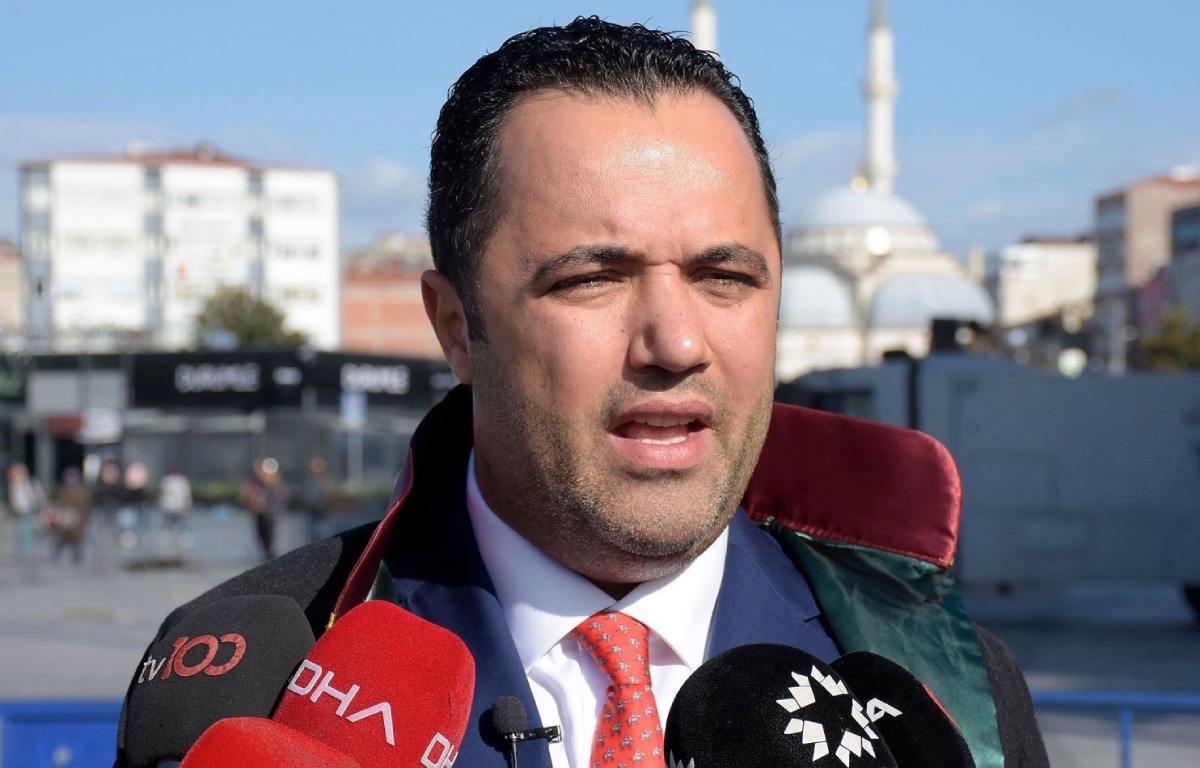
Rezan Epözdemir, a 41-year-old Turkish lawyer known for his work on high-profile murder and fraud cases, was arrested in Istanbul on August 10.
Authorities accuse him of acting as an intermediary in a bribery scheme.
The Istanbul Chief Public Prosecutor’s Office is investigating two separate cases that led to Epözdemir’s detention. Prosecutors allege that the suspects, including a prosecutor, were involved in bribery, aiding the FETÖ movement, and spying on military and political figures. The bribery allegations are based on testimony from a witness identified only as A.D., WhatsApp messages, and mobile location data.
According to prosecutors, Epözdemir and a prosecutor received $150,000 from an individual named C.Ç. in 2021. The money was reportedly paid in two installments, before and after C.Ç.’s release from prison. Two of the three alleged bribery incidents involved Epözdemir’s clients, requiring the separation of cases to investigate and prosecute the lawyers involved.
The Istanbul Criminal Court of Peace ordered Epözdemir’s arrest on bribery charges but rejected prosecutors’ request for a travel ban related to terrorism allegations. A second suspect, court clerk Kürşat Yılmaz, was released after cooperating with police under Turkey’s “effective remorse” provisions.
Epözdemir denies the accusations, describing them as part of a “plot” by another lawyer with whom he clashed during a high-profile fraud case involving Denizbank. He represents several accused victims in that case.
Epözdemir claims the other lawyer, who previously worked for Denizbank’s management, helped bank officials avoid prosecution. After a change in the prosecutor’s office, those officials were later charged with fraud, which Epözdemir alleges triggered a smear campaign against him in November 2024.
He also points to social media posts linking him to individuals described in the press as “Mossad and CIA agents,” suggesting these too were part of the same operation. Epözdemir notes that prosecutors have already declined to pursue charges in a separate investigation into such claims.
Epözdemir is a graduate of Marmara University’s law school. His clients have included the families of Münevver Karabulut, murdered by her boyfriend in 2009; Pınar Gültekin, a university student assassinated in 2020; and victims of Turkey’s 2023 earthquakes. He currently represents the family of Mattia Ahmet Minguzzi, a 16-year-old Italian-Turkish boy stabbed to death in Istanbul earlier this year. In 2021, he served as deputy chair of the Galatasaray Sports Club.
Turkey’s Judiciary Faces Ongoing Challenges
Epözdemir’s arrest comes amid broader concerns about the independence of Turkey’s courts. Following the failed coup attempt in July 2016, the government dismissed or imprisoned approximately 5,000 judges and prosecutors.
In September 2023, the European Court of Human Rights ruled that Turkey’s conviction of a teacher for terrorism violated the principle of nullum crimen sine lege. Turkey has not fully implemented this ruling.
Legal scholars note that, despite constitutional guarantees of judicial independence, the executive branch has increasingly influenced the courts, turning them into extensions of political power.
The legal community has reacted strongly to Epözdemir’s arrest. Younger lawyers in Turkey report exercising greater caution when handling politically sensitive cases, fearing similar repercussions. The Istanbul Bar Association publicly criticized the release of Epözdemir’s case file, arguing it violated the presumption of innocence and the specific protections afforded to lawyers under Turkish criminal procedure.
Galatasaray Sports Club suspended Epözdemir following the allegations, citing the need to protect the club’s reputation. Human rights organizations have included his detention in their annual assessments of Turkey’s rule of law.
Observers continue to watch whether Epözdemir case can help restore the rule of law as envisioned by Turkey’s constitution.